

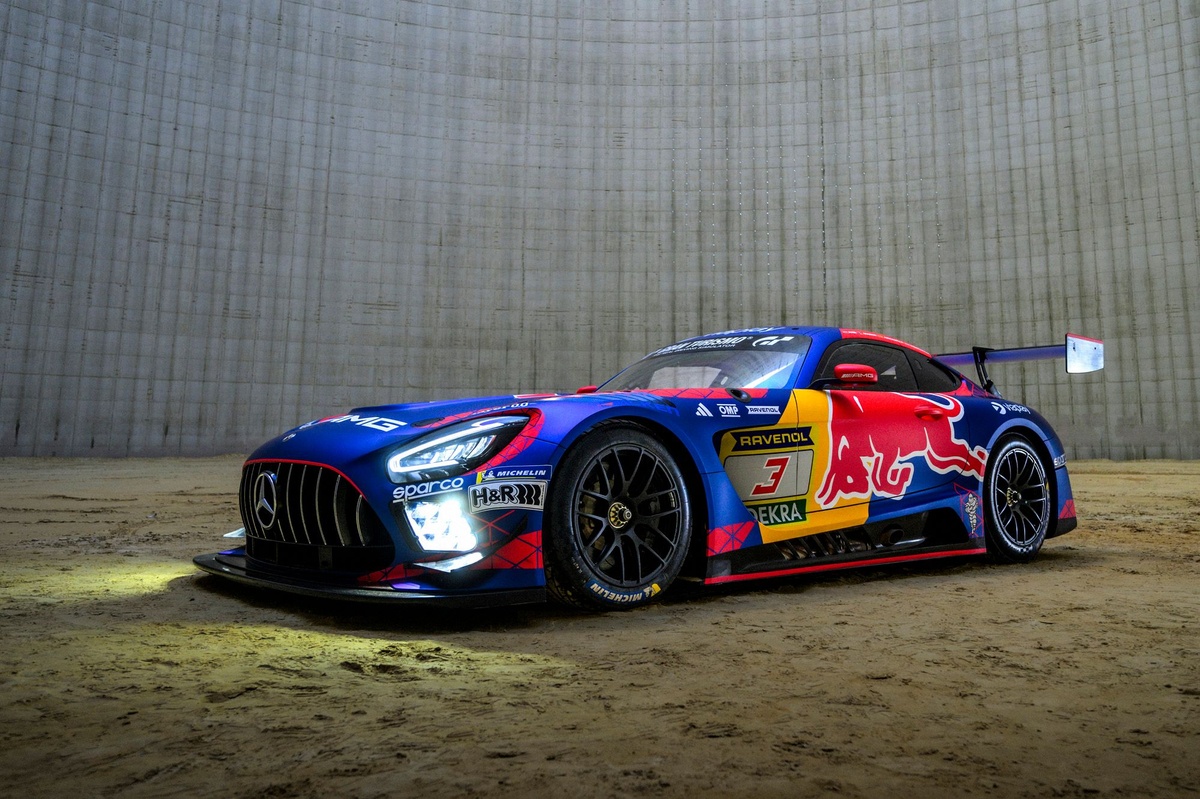
Why Max Verstappen at the Nürburgring Matters More Than a Result
There is something quietly profound about watching the greatest racing driver of his generation climb into a GT3 car and take on the Green Hell — not for a world championship, not for a constructor’s title, but simply because he loves to race.
Max Verstappen’s debut at the 2026 ADAC RAVENOL 24 Hours Nürburgring saw the four-time Formula 1 World Champion driving a Mercedes-AMG GT3 under his own Verstappen Racing banner, alongside teammates Dani Juncadella, Jules Gounon and Lucas Auer. He didn’t just show up to tick a box. He showed up to compete — and compete he did. During a stunning night stint, Verstappen seized the overall lead of the race, battling hard through the darkness before handing the car over to Jules Gounon following a strong double stint. The result ultimately wasn’t what the team had hoped for — a major problem late on ended their challenge, with the team dropping down to sixth in a heartbreaking end to their attempt — but the performance was undeniable. The subjective consensus among observers was overwhelming: his display was nothing short of extraordinary, cementing his reputation as arguably the fastest driver on the planet right now.
But beyond the lap times and the drama, what made this weekend truly special was what it represented.
Reaching Beyond the Pinnacle
It would have been entirely understandable — perhaps even expected — for a driver of Verstappen’s stature to simply rest on his laurels. Four world championships. Dozens of race victories. Records that may never be broken. Formula 1 doesn’t ask anything more of him. And yet here he was, learning a new discipline, adapting to a GT3 machine, navigating traffic from dozens of slower cars, and doing it all in the dark and the rain on one of the most unforgiving tracks on earth. “The Nürburgring is a special place. There is no other race track quite like it. The 24-hour race at the Nürburgring has been on my bucket list for a long time,” Verstappen revealed. There was no performance clause attached to that ambition — just a genuine, almost childlike desire to go racing.
This is what separates the truly great from the merely excellent. It is one thing to dominate your own arena. It is another to willingly step outside of it, to risk your reputation, to embrace being a student again.
An Echo of a Golden Era
This spirit — raw, unfiltered, motivated purely by the thrill of the race itself — harks back to an era many fans remember with immense fondness. A time when the boundaries between disciplines were crossed regularly, when drivers raced not just on Sundays in front of television cameras but any time a steering wheel was available.
Ayrton Senna, perhaps the most evocative name in the sport’s history, famously spoke about what he considered his most meaningful racing experience. It wasn’t Monaco in the rain. It wasn’t his 1988 championship. When asked to identify the purest racing he ever knew, Senna pointed to go-karting — specifically to his battles with Terry Fullerton, a British kart racer whom Senna regarded as the most complete driver he had ever faced. In those karting days, stripped of aerodynamic complexity and political intrigue, with nowhere to hide and nothing but raw instinct separating one driver from another, Senna found what racing truly was.
It is a sentiment that resonates deeply when you watch Verstappen at the Nürburgring. There are no team orders here, no tyre delta calculations, no championship points at stake. Just a driver, a car, and the track. Senna would have understood it completely.
The Sim Racing Pipeline: Building Tomorrow’s Grid Today
What makes Verstappen’s story even richer is that his passion for racing extends far beyond race weekends. Long before he was lapping the Nordschleife in a GT3 machine, Verstappen was one of the world’s most committed advocates for sim racing — and he has turned that passion into something with genuine, lasting impact.
In March 2026, Verstappen announced that Team Redline would rebrand as Verstappen Sim Racing, bringing the virtual team fully under the Verstappen Racing umbrella, with the ambition of building a unified racing ecosystem spanning all forms of motorsport, from GT3 racing to the virtual world.
“Sim racing is a big passion of mine outside Formula 1,” Verstappen said. “It is where I spend a lot of my time off track, and part of what I am building with Verstappen Racing.”
This is not merely a vanity project. The proof is already evident in Chris Lulham, who joined Team Redline in 2021 and was handpicked by Verstappen to step up to real-world GT3 competition in 2025 — going on to win the 24 Hours of Spa in class and claim Gold Cup titles in both the Endurance and Sprint championships in the GT World Challenge Europe. A young driver who honed his craft on a simulator is now winning endurance races at some of the most storied circuits in the world, because one of the greatest drivers alive took sim racing seriously enough to build a genuine ladder from virtual to reality.
What This All Means
The attendance record shattered at this year’s Nürburgring 24 Hours — the first sell-out in the event’s history — tells its own story about the pull Verstappen’s presence had on the sport. But the significance goes beyond ticket sales.
In an era when Formula 1 has become increasingly sanitised and corporate, Verstappen’s approach feels like a reminder of something important. He races because he loves to race. He builds teams because he wants to give others the same chance. He champions sim racing because he sees in it the same thing Senna saw in karting — a pure, unvarnished arena where talent cannot hide behind machinery or money.
The Nürburgring in 2026 may not have given him the trophy he deserved. But it gave something perhaps more valuable: a glimpse of a champion who, even at the very top of his profession, still races with the heart of a kid who just wants to go as fast as possible — and bring as many others along for the ride as he can. That, above all, is worth celebrating.
Comments are closed